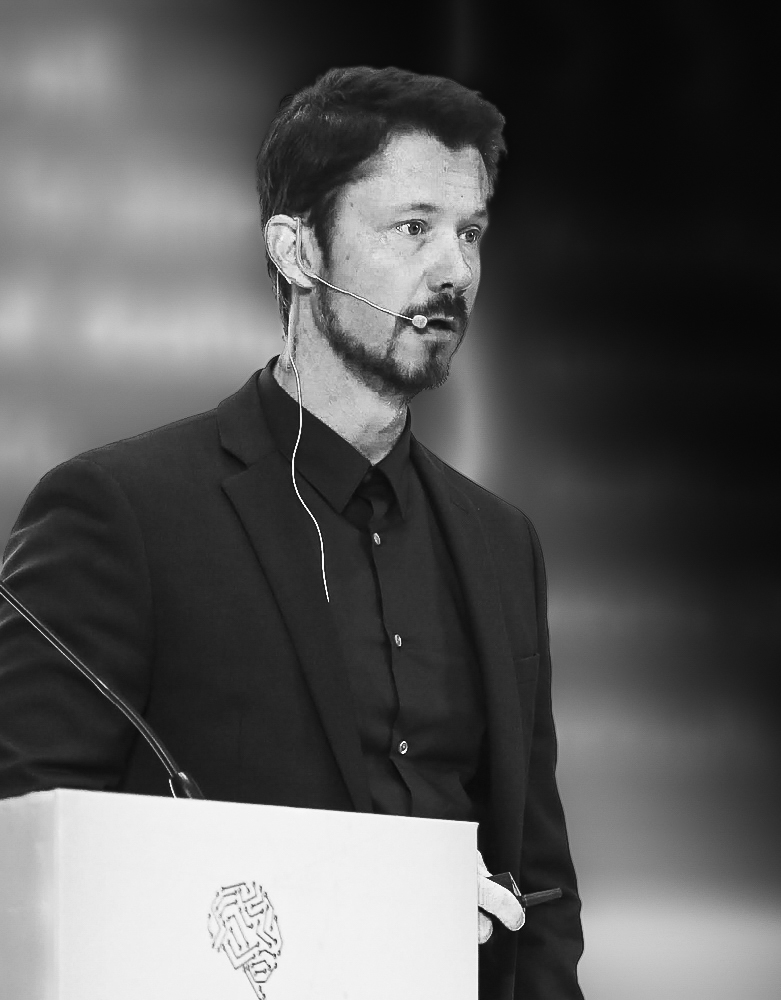
I help founders, executives, and boards make the AI and data calls they cannot safely delegate: what to build, what to buy, what to claim, and what needs proof before it gets expensive.
I spent nearly two decades building AI and data into products at Philips, much of it in regulated settings where a wrong call has consequences. I've stood in all three rooms: the strategy table, the engineering sprint, and the diligence read.
Start a conversation20 years at Philips · regulated product AI · global AI deployment · M&A diligence · PhD, computer science
AI creates value when the decision is specific enough to test. I help with the calls where vague ambition turns into product, cost, risk, or valuation.
For your business, not in the abstract. What is worth building, what is already becoming a commodity, and where AI or data could hold a defensible position beyond a model wrapper. This helps when the CEO, CTO, or board knows an AI story is needed but the strategic shape is still unclear.
The bigger question is not how you use AI. It is how AI changes what you sell. I spent years on this at Philips, productizing AI in regulated, high-stakes settings, including medical imaging. I help teams separate what is feasible, what is safe to ship, what customers will trust, and what engineering can defend.
Many decisions start as build versus buy, and they rarely stay that simple. The question is what to own, rent, integrate, or avoid. Per-seat pricing, metered use, committed spend, reserved capacity, data location and jurisdiction, latency, reliability, and budget accountability all move the answer. Get it wrong and AI doesn't just stall adoption, it turns into a standing CFO problem. Agents make it harder, because spend starts to behave less like SaaS seats and more like cloud consumption, where the unit price can fall while the total keeps climbing. I treat the economics as part of the architecture.
I've sat on the acquirer's side of these. When someone is running diligence on you, when you are raising from investors, or when you are sizing up a target, I know what gets probed: data provenance, model defensibility, workflow dependency, hidden technical debt, regulatory exposure, and claims that quietly damage a valuation.
The useful work usually sits in the gap between the AI story leadership wants to tell, the product reality engineering can defend, and the evidence an investor or acquirer will ask for. That gap is where I work.
For a high-stakes decision, whether a board paper, a diligence read, a product claim, or an agentic workflow, one confident model answer is not evidence, and you cannot hand the accountability for it to a model. The verification burden stays with the owner, and my job is to make it low-friction. It is a discipline rather than a single trick: source-level checking, model comparison where it earns its keep, domain review, evals where they fit, and honest handling of uncertainty. The aim is not to make AI infallible. It is to stop weak claims from quietly becoming load-bearing, without grinding the work to a halt.
Swapping an API endpoint is usually the easy part. The lock-in lives in the workflow: evals, monitoring, data paths, procurement terms, human routines, and the assumptions baked into product and operating design. I help architect decisions so that when capability, pricing, or provider leadership shifts, you can move without rediscovering the switching cost the hard way.
A focused hour or two to pressure-test one expensive AI or data decision. Best for founders, executives, or board members who need a clear read before they commit money, product direction, or credibility.
A short, defined project around one decision: build vs buy, product-AI feasibility, adoption economics, vendor posture, lock-in risk, or the board and investor narrative. You get a clear recommendation, the reasoning behind it, the assumptions that matter, and the claims that still need proof.
For investors, acquirers, founders, or boards who need to know whether an AI or data story holds up. I look at defensibility, data provenance, product reality, technical dependency, cost exposure, and whether an advantage is durable or just a fragile claim.
A standing AI advisory seat for a company, founder, executive team, or board. Useful when AI and data decisions keep surfacing across product, strategy, architecture, vendors, risk, and investor communication.
Bring one decision, not a tour of the whole AI landscape. In a first conversation I'll sharpen what to test, what isn't worth building, where the cost or lock-in really sits, and which claim has to survive scrutiny. I'll also tell you where I can't help.
RAIVEN: Rational AI Ventures. Most AI commentary runs to one of two extremes: boosters selling oracles and skeptics dismissing useful tools. Both miss the point.
AI changes what is possible. It also errs, drifts, fails in odd ways, and creates new operational and financial risk. Treat these systems as tools and you compound an advantage. Treat them as oracles and you get burned.
A few unfashionable specifics
Rational does not mean cautious. It means being clear about where the value is, where the limits are, and how to tell them apart.
I spent nearly twenty years at Philips turning AI and data into products and operating models.
Most recently I led global AI innovation and deployment for the Precision Diagnosis business: AI built into products, in a regulated industry where getting imaging AI wrong has real consequences.
Before that I co-founded Philips' global Data & AI Center of Excellence and led its AI practice, building the AI Maturity Framework that helped its business units adopt AI safely and profitably. Earlier I headed Data Science & AI for Europe inside an internal Philips AI venture.
I hold a PhD in computer science (TU/e). Several of my years at Philips included M&A diligence from the inside. Along the way I picked up a few patents, federated learning among them, and spoke on AI at conferences across Europe.
That mix is the point. I can talk to the boardroom and the engineering sprint in the same conversation, and say where they actually disagree.
I'm also a published photographer (among others, in a National Geographic photography book), with a strong focus on long-term humanistic projects where people are front and center (vdovjak.com). I mention it because the advisory work draws on the same habit: noticing what others miss, especially where the technical and human stories diverge.

Tell me what you're wrestling with on AI or data, and I'll tell you whether and how I can help.